




ENG
HOMEConnector InformationWhat Are Mezzanine Connectors?

  • What Are Mezzanine Connectors?

  • 2026-06-04

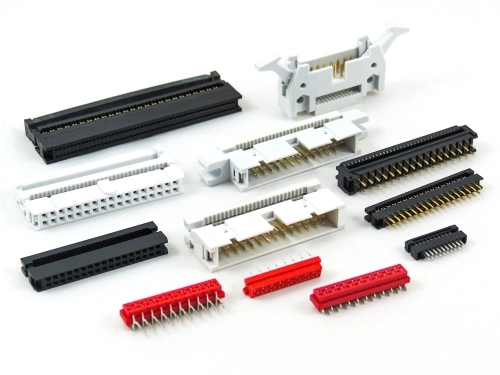
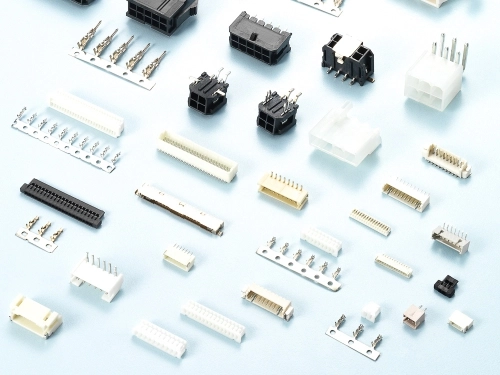
Quietly orchestrating the flow of power and high-speed signals across everything from handheld devices to massive data centers, it’s no wonder electronic connectors are as prevalent as they are. Even the most advanced systems would collapse into rigid, unserviceable entanglements without them. Among the large swath of electronic connector variations out there, board-to-board (BTB) connectors play one of the more pivotal roles, linking printed circuit boards (PCBs) together in clean, modular architectures. These BTB connectors come in several forms, too, including parallel stacking connectors, coplanar connectors, and right-angle configurations. 

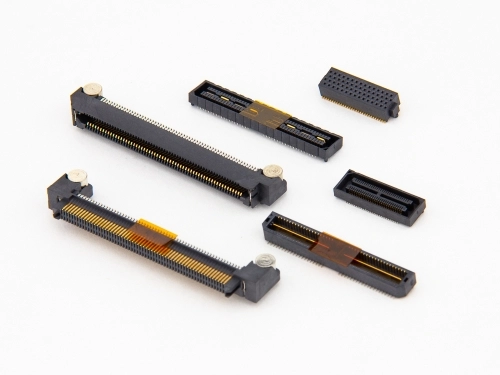
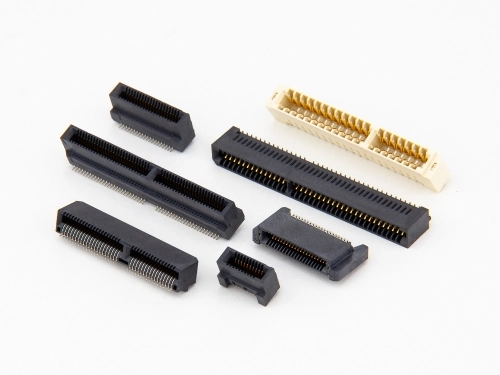
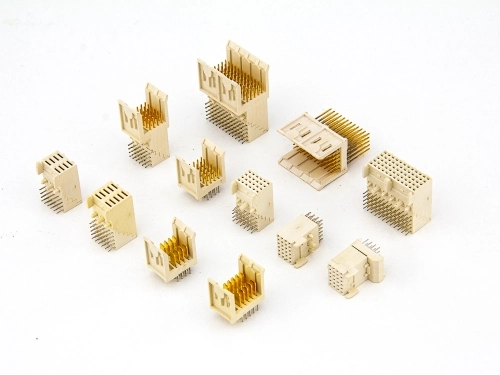
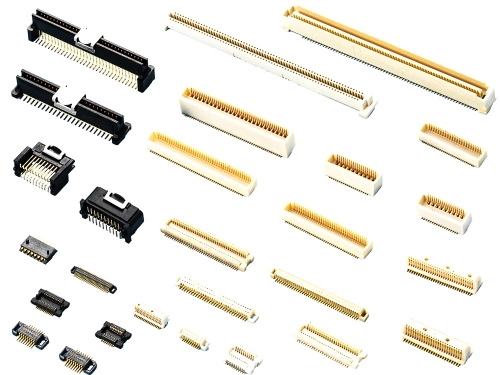
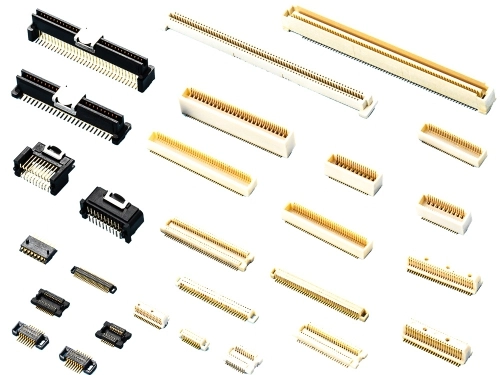
But, mezzanine connectors play a particular role: a specialized category of board-to-board connectors engineered to stack PCBs vertically. The term “mezzanine” itself is borrowed from architecture, referring to an intermediate level, which is fitting given how these connectors enable compact, layered designs, maximizing space without sacrificing performance. In an era obsessed with miniaturization and speed, mezzanine connectors have become essential building blocks for dense, high-performance electronic systems.

What is a Mezzanine Connector?

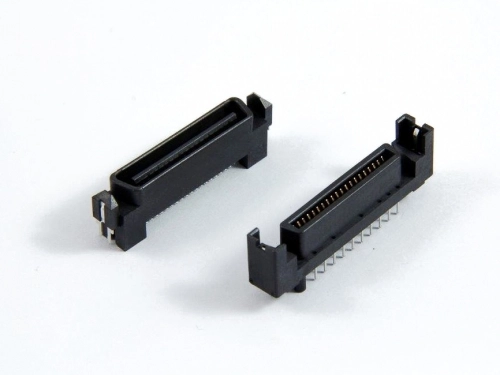
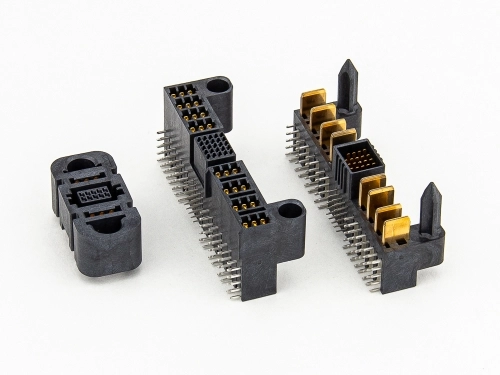
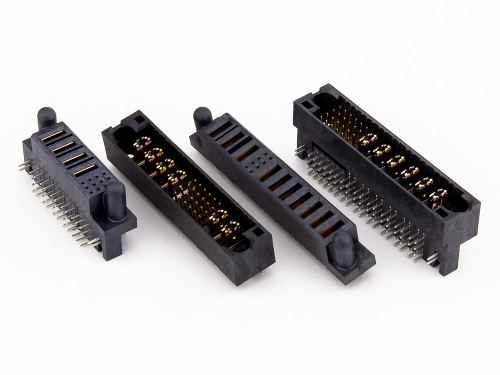
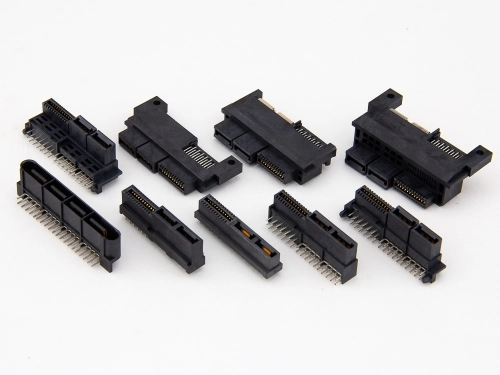
A mezzanine connector is a type of high-density board-to-board connector designed to connect two parallel PCBs in a stacked configuration (think of them being floors on a luxury high-rise building), enabling efficient vertical integration of electronic components. The connector’s primary purpose is to maintain a compact footprint while still delivering consistent and reliable signal integrity, power distribution, and data transmission between boards. Mezzanine connectors typically consist of a mating pair—one plug and one receptacle—which is how it ensures consistent electrical contact across dozens, or even hundreds, of pins.

What makes mezzanine connectors particularly fascinating is their ability to support high-speed data rates—often exceeding 25Gbps per lane in advanced designs—while typically maintaining low insertion loss and minimal crosstalk. Many feature fine pitches—sometimes as small as 0.8mm or less—to allow engineers to pack more connections into tighter spaces. Internally, contact geometry, plating thickness, and housing materials are carefully engineered to balance durability with performance. Additionally—while niche enough only seasoned engineers have appreciated this before—their stack height can range from under 3mm to over 20mm. This isn’t just a mechanical choice, but a critical factor influencing airflow, thermal management, and even electromagnetic performance.

How Do People Use Mezzanine Connectors?

The vertical stacking approach of mezzanine connectors saves valuable PCB real estate, reduces signal path lengths, and supports modular upgrades without redesigning entire systems. In environments where space, speed, and scalability are non-negotiable, mezzanine connectors are often the preferred solution. As a matter of fact, across industries, their applications are both widespread and surprisingly nuanced:

  • Data Centers & Servers: High-speed interconnects in blade servers, storage arrays, and AI processing units
  • Telecommunications: Network switches, routers, and 5G infrastructure requiring dense signal routing
  • Consumer Electronics: Compact devices like laptops, gaming consoles, and advanced wearables
  • Industrial Automation: Robotics, PLCs, and control systems demanding reliability in harsh environments
  • Medical Equipment: Imaging systems, diagnostic tools, and patient monitoring devices where precision is critical
  • Automotive & EV Systems: Advanced driver-assistance systems (ADAS), infotainment modules, and battery management systems
  • Aerospace & Defense: Ruggedized electronics used in avionics, satellites, and mission-critical hardware

A lesser-known insight more people should be aware of: mezzanine connectors are often used in modular prototyping ecosystems, allowing engineers to iterate on designs quickly by swapping stacked boards instead of redesigning monolithic layouts. This invaluable ability of the mezzanine connector doesn’t just simplify engineering prototyping and finalization, but subtly encourages innovation. 

How Much Do Mezzanine Connectors Cost?

The cost of mezzanine connectors reflects their precision engineering and performance capabilities, spanning a wide range depending on specifications. At the lower end, standard mezzanine connectors used in consumer electronics can cost approximately $0.50 to $5 per unit in volume production. Mid-range connectors designed for industrial or telecom applications typically fall between $5 and $25 per unit. However, high-performance, high-speed mezzanine connectors, especially those supporting advanced data rates and/or ruggedized designs, can exceed $30 to $100+ per unit. 

Other novel factors capable of negatively or positively influencing its prices include pitch size, pin count, plating material (gold vs. tin), stack height, and compliance with industry standards. For example, connectors with thicker gold plating or tighter tolerances demand more complex manufacturing processes, driving up costs. Additionally, these electronic connectors are typically designed for high-frequency applications that require advanced signal integrity engineering, which further contributes to their premium pricing. In essence, mezzanine connectors are not just components; they are precision instruments where cost is closely tied to performance, reliability, and longevity.

Choosing the Right Mezzanine Connector Manufacturer

Choosing a mezzanine connector manufacturer is a decision capable of quietly shaping the success or failure of an entire system. Some common red flags to be aware of include inconsistent quality control, vague material specifications, and an inability to clearly define their tolerances, plating standards, or testing procedures. Equally concerning are suppliers who lack scalability, as they may struggle to meet demand once your project moves from prototype to production. You are, essentially, gambling on your reputation and performance when working with less reputable manufacturers. 

On the other hand, the right manufacturer brings clarity, consistency, and confidence. Look for partners who emphasize precision engineering, straightforward transparency, robust testing protocols, and flexible design capabilities. Thankfully, Oupiin Enterprise offers said robust portfolio, which is built on performance, reliability, and adaptability. Electronic connectors are not just links between components, but lifelines of entire systems, which is why we are transparent throughout the process and the certifications we possess. 

For additional questions or concerns, consider sending us a message or giving us a call. To send us a direct message, you can click the following link “Contact Us” or click the “Contact Us” button at the top of our website. In less than 72 hours, you will receive a message from us. However, you can also call our Valencia, California, USA office (+1(800) 820-7446) or our headquarters in Taoyuan City, Taiwan (+886-3-3655030). We are looking forward to our future conversations!


202502211359388tpM   20250221140032bqsM   20250221140042bUxX