




ENG
HOMEConnector Information What Are Card Edges?

  • What Are Card Edges?

  • 2025-12-03

In the 1920s, electricity was still being standardized across cities, and radio was the pinnacle of consumer technology. By the 1930s and 1940s, society had transitioned into using broadcast television and early computing systems. The 1950s and 1960s brought mainframe computers and integrated circuits, transforming business, defense, and research. Jump another few decades, and you arrive at the 1980s and 1990s, when personal computers, mobile phones, and the internet began reshaping daily life. Fast-forward to the 2000s and 2010s, and we entered an era defined by smartphones, cloud computing, and artificial intelligence. Now, in the 2020s, everything from medical devices to autonomous vehicles relies on powerful electronics.
However, none of this progress would be possible without electronic connectors. These components are the silent enablers of technology, ensuring electricity, data, and signals move seamlessly from one system to another. Within this category, card edge connectors have played a critical role. By allowing printed circuit boards (PCBs) to slide directly into sockets, card edge connectors became one of the most efficient ways to build modular, serviceable, and high-density systems. Their significance has only grown as industries’ compact designs demand faster, more reliable connections.

What Do Card Edges Do?

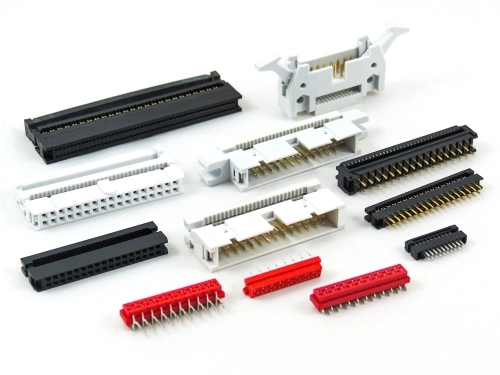
Card edge connectors are one of the oldest and most reliable connector designs in the electronics industry. Emerging in the mid-20th century, it was initially created to allow the easy removal and replacement of circuit boards in early computing systems. Instead of soldering each connection permanently, the card edge allowed a PCB with conductive traces along its edge to slide directly into a corresponding slot or socket, drastically reducing assembly time and simplifying maintenance.
At its core, card edge connectors serve two functions: establish an electrical pathway between a PCB and an external system, and secure the board mechanically in place. The “edge” of the PCB is plated with conductive material (often gold or nickel) that mates with the contacts inside the connector slot. Combining each advancement has engineered a durable interface capable of handling frequent insertion and removal cycles without sacrificing performance. Its modular nature makes it indispensable in industries where scalability and fast servicing are priorities. 

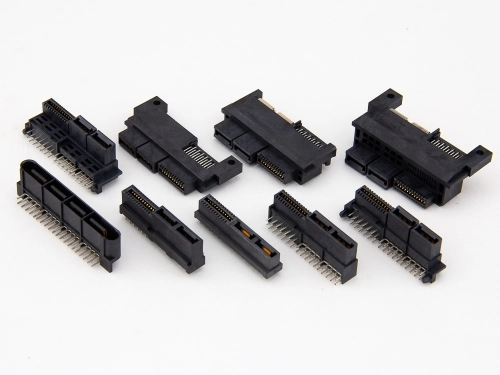
What are High Speed Card Edges?

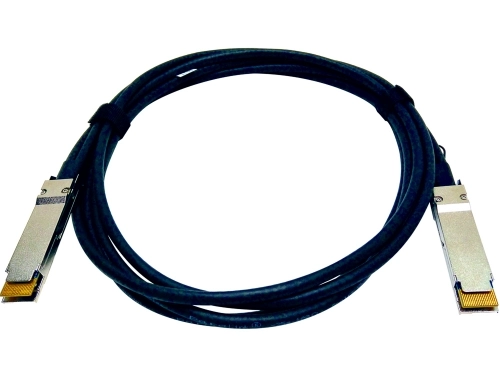
The “high speed” card edge connector is a card edge variation designed specifically to handle the demands of superior data transfer rates. While standard options work well for many applications, it, unfortunately, can not transmit signals at multiple gigabits per second. “High speed” versions are engineered with improved signal integrity in mind, ensuring minimal crosstalk, low insertion loss, and robust performance under higher frequencies. The key is not just physical robustness, but maintaining electrical integrity across dense, high-speed PCB layouts.
The main differences between standard and “high speed” card edges lie in design refinements and material choices. High-speed connectors often use optimized contact geometries, improved plating (such as thicker or higher-grade gold), and insulation materials reducing dielectric losses. They may also include shielding features or precise tolerances to reduce electromagnetic interference (EMI). Essentially, while both types serve the same mechanical function, high speed card edges are tailored to meet the ever-growing demand of modern, consistent digital communication.

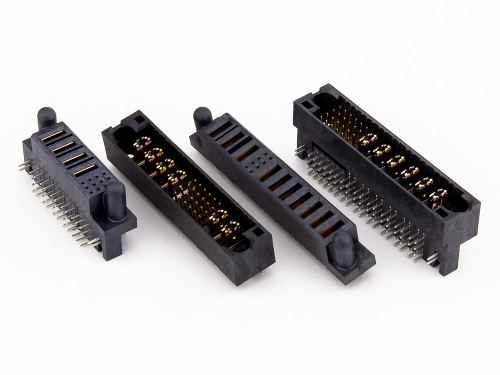
What are High Power Card Edges?

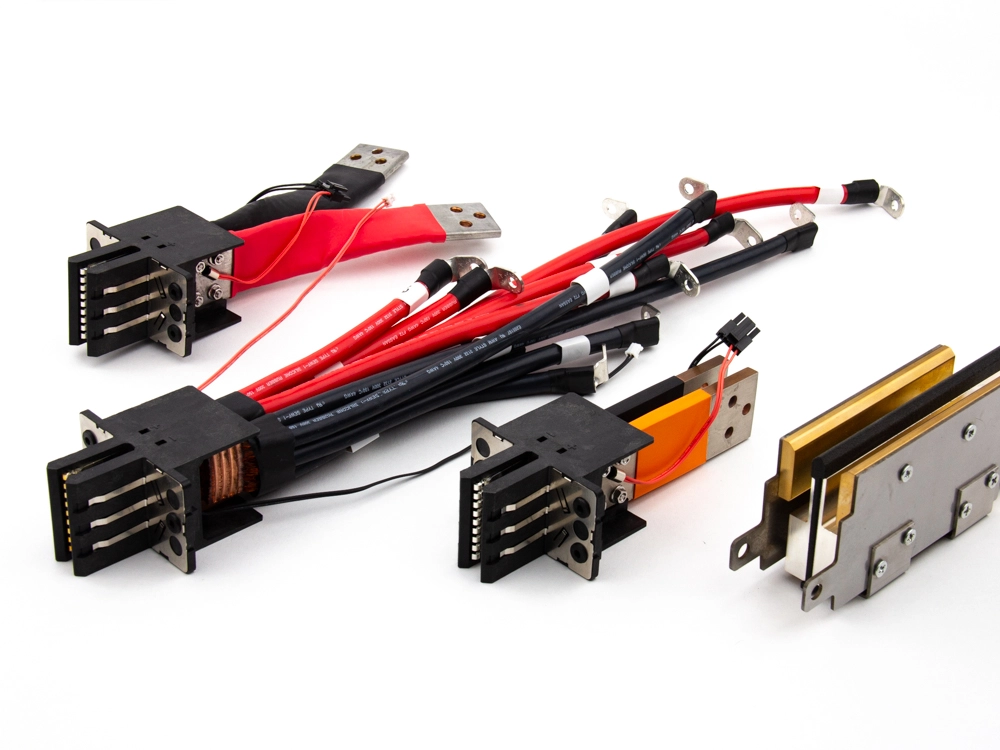
High power card edge connectors are specialized board-to-board interfaces, delivering significantly higher current than standard card edges. Handling this energy makes it essential in systems where robust power distribution is just as critical as signal integrity. While traditional card edge connectors focus on providing a simple mating interface between a PCB and its corresponding slot, high power versions use thicker copper pads, wider contact beams, and reinforced materials to handle elevated amperage without overheating or degrading over time. Its purpose is straightforward: move substantial power through a compact, modular connection point while maintaining mechanical stability and electrical efficiency. 
Despite being more advanced versions of a card edge connector, there is a difference between a high power one and a high speed one. High speed connectors are optimized for rapid data transmission, using controlled impedance, precise plating, and refined geometries to minimize signal loss, crosstalk, and EMI. High power card edges, on the other hand, prioritize current-carrying capacity, heat dissipation, and contact strength over signal performance. High speed designs worry about gigabit-level signal integrity, high power card edges worry about amperage, temperature rise, and long-term durability under heavy electrical load. 

How Much Do Card Edge Connectors Cost?

The cost of a card edge connector depends heavily on its type, size, and material composition. Standard card edge connectors are relatively affordable, often ranging from a few cents to several dollars per piece, but the cost can still vary depending on pin count and plating thickness. Their simple construction and lack of a mating half (since the PCB itself serves that role) make them one of the most cost-effective options for board-to-board connectivity.
High speed card edge connectors, however, come at a premium. Prices can range from a few dollars to over $20 per connector, depending on the sophistication of the design, signal requirements, and compliance with high-speed standards. The added expense comes from specialized materials (like high-grade gold plating), precision tooling, and advanced manufacturing processes, ensuring performance at multi-gigabit data rates. Still, for industries where performance and reliability are mission-critical, this cost is a necessary investment in system stability.
High power card edge connectors fall into a different pricing tier. Unlike standard or high-speed versions, these connectors use thicker copper, reinforced contact beams, higher-temperature plastics, and more robust plating to prevent heat buildup and ensure consistent conductivity under heavy load. These material upgrades, combined with stricter quality control, thermal-rise testing, and specialized tooling, naturally raise production costs. As a result, high power card edge connectors typically range from a few dollars to well above $20 per piece. 

Where to Find High-Quality and Affordable Card Edges?

Maybe going with the cheapest and most bare-boned card edge connectors will lead to growth? But, were they to start malfunctioning, your brand will face major consequences on a personal and professional level. Thankfully, when identifying the right card edge connector manufacturer, there are a few aspects highlighting their value. Engineers and procurement teams should consider looking for companies with some of these attributes:

  • Proven quality assurance — compliance with global standards (UL, RoHS, ISO)
  • Broad product range — both standard and high speed card edges in multiple pitches, plating options, and configurations
  • Customization capabilities — the ability to tailor connectors to specific applications
  • Global support and logistics — ensuring timely delivery and ongoing availability

A strong manufacturer not only provides high-quality components but also serves as a long-term partner, offering documentation, testing data, and design consultations. Companies, like Oupiin Enterprise, are an example of a connector manufacturer bringing engineering expertise, consistent quality, and product variety together. By combining reliability with innovation, you are presented card edge connectors and power card connectors providing a stable and effective performance.


202502211359388tpM   20250221140032bqsM   20250221140042bUxX